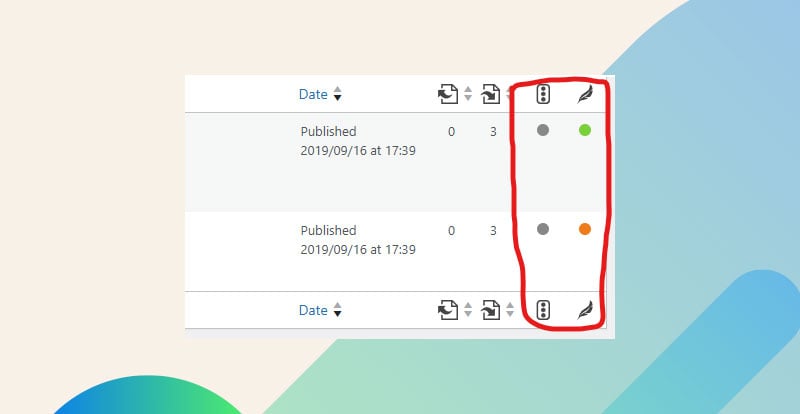
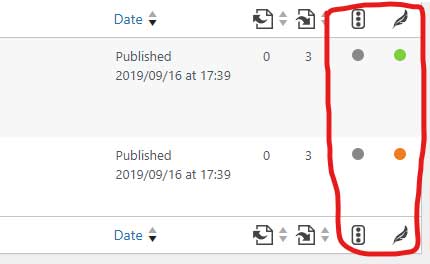
Yoast gives you circles and colors to give you a gauge of SEO-worthiness. We turn them off because they're useless.
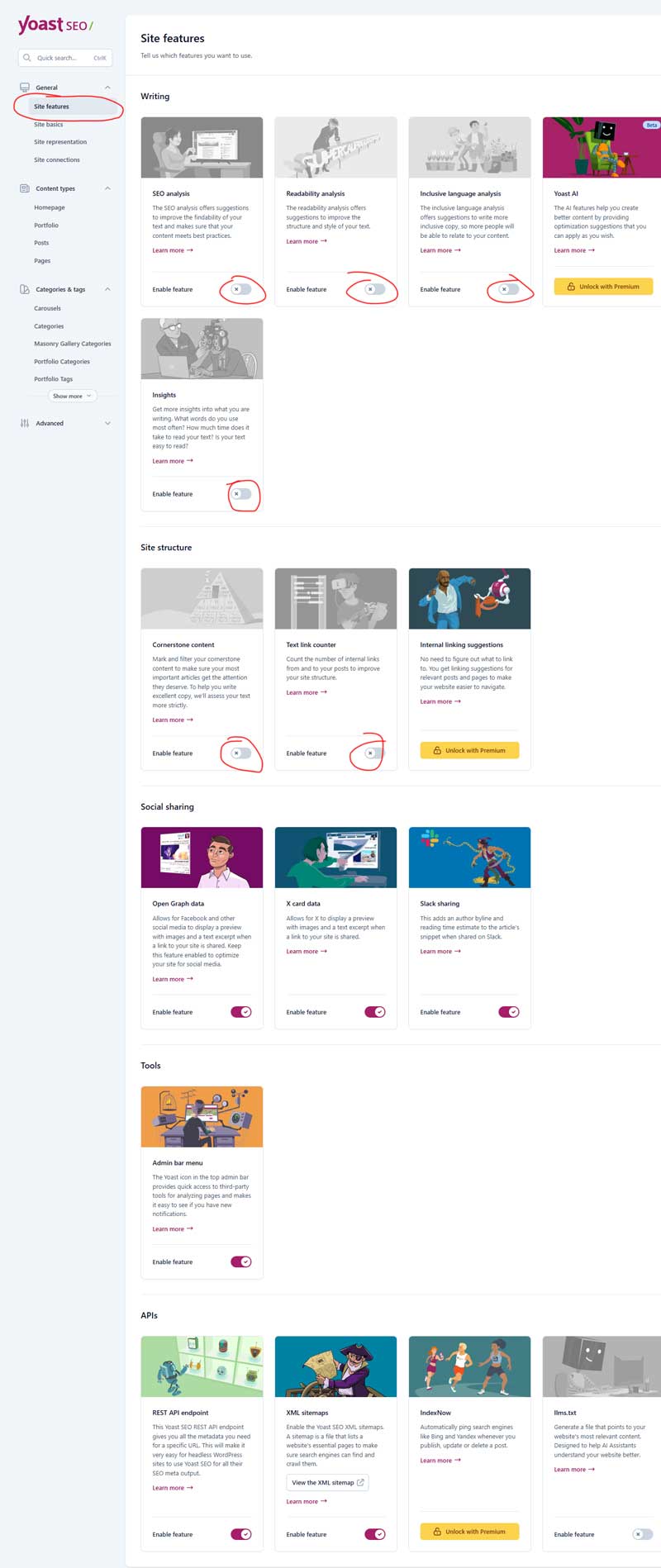
That doesn’t mean Yoast is useless. We use it for the boring but important stuff like titles, metas, canonicals, sitemaps, and social tags. It’s a handy wrench in the box. It’s just not a scoreboard for “good SEO,” and chasing all green usually makes content worse. In fact, we usually turn most of these features off. You can see what settings we use below (the image is large so putting it down there).
The biggest reason the colors are stupid: Yoast often can’t even see your real content.
If you use a page builder like Elementor, Divi, WPBakery, or Beaver Builder, a lot of your copy sits in shortcodes or serialized blobs the analyzer can’t parse. If you use Gutenberg with custom blocks, the analyzer looks at the editor text but ignores the HTML your render callbacks output. If you store important copy in ACF or Meta Box fields, those fields won’t get analyzed unless you wire custom filters. If your page loads FAQs, tabs, or specs with AJAX or JavaScript, the analyzer never reads them. If you’re headless or use a SPA where content hydrates client side, the meter sees almost nothing.
Result: a great page can show orange or red. A thin page that happens to have a neat paragraph in the classic editor can show green. The colors reflect what Yoast can parse, not what users or Google actually get.
Why “all green” doesn’t predict rankings
-
Score does not equal search intent. You can satisfy every checklist item and still miss what the query actually wants. Service vs guide vs comparison matters more than circles.
-
No competitive context. The meter doesn’t know the ten pages you’re fighting on the SERP or why those win.
-
Page level tunnel vision. Site architecture, internal links, topical coverage, and brand signals move the needle far more than a single page’s color.
-
Readability and density myths. Flesch scores and keyword counts are easy to game and often punish expert content that users actually want.
-
Easy to game, bad for business. You can turn lights green with awkward edits, stuffed phrases, or stripped detail that kills conversions.
What we still use Yoast for
Yoast is still an important part of our basic SEO service, but it's not required. You can use any SEO plugin to do the below:
-
Title and meta fields so your snippets look clean
-
Canonicals so duplicates don’t fight each other
-
XML sitemap generation so new URLs get seen
-
Open Graph and Twitter tags for decent social shares
-
A simple starting point for Organization or LocalBusiness schema
What real SEO looks like in practice
-
One clear intent per URL. Decide the job of the page and write to that job.
-
Solid architecture. Give people and crawlers a hub and clear internal links. Use anchors that match how people search.
-
Content that solves the task. Steps, prices, examples, comparisons, FAQs, and the proof people need to act.
-
Technical basics that actually matter. Fast server response, clean crawl paths, correct canonicals, zero index blockers, working hreflang if relevant.
-
Entities and schema. Organization or LocalBusiness on the homepage, Product or Service where it fits, FAQ and Breadcrumb where it helps. Keep names and sameAs links consistent across the web.
-
Off site signals. Links, mentions, reviews, and for local sites, a strong Google Business Profile with consistent NAP.
-
Measure with real data. Search Console queries and CTR, conversions, and behavior on page. Iterate from gaps you find there, not from the color picker inside a plugin.
FAQ
Should I aim for all green?
No. Make the basics correct and focus on intent, links, speed, structure, and the actual job of the page.
Does a green score help rankings?
No direct effect. It’s a hint system, not a ranking signal.
Why does my builder page show red even though it’s comprehensive?
Yoast often can’t read builder content, custom blocks, or ACF fields. The analyzer scores what it can parse, not the full rendered page.
Is Yoast required for WordPress SEO?
No. We like it for convenience. Any plugin that gives you titles, metas, canonicals, and sitemaps is fine.
What should I do instead of chasing colors?
Define intent, write for the task, set clean titles and metas, add relevant schema, build internal links, make it fast, and measure results in Search Console. If a suggestion improves clarity or the snippet, take it. If it makes the page worse, skip it.
Yoast Settings We Use